


Free Flow of Information for whom?
13 years ago
Lawyers for the Obama administration struggled on Friday to persuade a federal judge here to throw out an unusual civil lawsuit against John C. Yoo, the former government lawyer whose memorandums on torture were used by the Bush administration to justify sweeping policies on detention and interrogation.
Despite their efforts, the judge did not seem inclined to dismiss the lawsuit, which was brought by Jose Padilla, an American citizen who spent more than three years in isolation in a military brig as an enemy combatant.
The judge, Jeffrey S. White of Federal District Court, explored the arguments of Mr. Padilla’s lawyers thoroughly, but he appeared to be skeptical of elements of the government’s argument.
In fact, Judge White, who was appointed by President George W. Bush, even told the government’s lawyers that Mr. Yoo’s 2001 memorandum stating that the constitutional protections against unreasonable searches and seizures can be overridden was “a pretty scary position.”
Mr. Padilla seeks monetary damages of just $1. His real goal, in this case and a number of others against other current and former United States officials, is a declaration from the government that his incarceration and harsh treatment were wrong.
“Plaintiffs seek to vindicate their constitutional rights,” the complaint stated, “and ensure that neither Mr. Padilla nor any other person is treated this way in the future.”
President Obama has shown little interest in prosecuting officials of the previous administration, and it is not clear whether there will be a government-sponsored investigation of Bush administration polices.
No man is an island, entire of itself; every man is a piece of the continent, a part of the main. If a clod be washed away by the sea, Europe is the less, as well as if a promontory were, as well as if a manor of thy friend's or of thine own were: any man's death diminishes me, because I am involved in mankind, and therefore never send to know for whom the bell tolls; it tolls for thee.
Neither can we call this a begging of misery, or a borrowing of misery, as though we were not miserable enough of ourselves, but must fetch in more from the next house, in taking upon us the misery of our neighbours. Truly it were an excusable covetousness if we did, for affliction is a treasure, and scarce any man hath enough of it. No man hath affliction enough that is not matured and ripened by it, and made fit for God by that affliction.
PRESIDENT Obama did not offer his patented poetry in his Inaugural Address. He did not add to his cache of quotations in Bartlett’s. He did not recreate J.F.K.’s inaugural, or Lincoln’s second, or F.D.R.’s first. The great orator was mainly at his best when taking shots at Bush and Cheney, who, in black hat and wheelchair, looked like the misbegotten spawn of the evil Mr. Potter in “It’s a Wonderful Life” and the Wicked Witch of the West.
Such was the judgment of many Washington drama critics. But there’s a reason that this speech was austere, not pretty. Form followed content. Obama wasn’t just rebuking the outgoing administration. He was delicately but unmistakably calling out the rest of us who went along for the ride as America swerved into the dangerous place we find ourselves now.
The difference in tone, friends and advisers say, reflects a split over Mr. Bush’s second-term foreign policy, which Mr. Cheney resisted as too dovish. It also reveals their divergent approaches to post-White House life. Mr. Bush, who is planning a public policy center in Dallas, is trying to shape his legacy by offering historians a glimpse of his thinking, while Mr. Cheney, primarily concerned about the terrorist threat, is setting the stage for a role as a standard-bearer for conservatives on national security.
“I feel very good about what we did,” the vice president told The Washington Times, adding, “If I was faced with those circumstances again, I’d do exactly the same thing.”

Q: What’s hard for you?
A: Mostly I straddle reality and the imagination. My reality needs imagination like a bulb needs a socket. My imagination needs reality like a blind man needs a cane. Math is hard. Reading a map. Following orders. Carpentry. Electronics. Plumbing. Remembering things correctly. Straight lines. Sheet rock. Finding a safety pin. Patience with others. Ordering in Chinese. Stereo instructions in German.
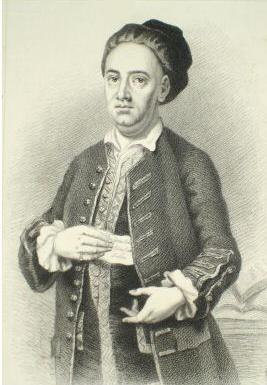
The son of a cobbler, Cave was born in Newton near Rugby, Warwickshire and attended the grammar school there, but was expelled after being accused of stealing from the headmaster. He worked at a variety of jobs, including timber merchant, reporter and printer. He conceived the idea of a periodical that would cover every topic the educated public was interested in, from commerce to poetry, and tried to convince several London printers and booksellers to take up the idea. When no one showed any interest, Cave took on the task by himself. The Gentleman's Magazine was launched in 1731 and soon became the most influential and most imitated periodical of its time. It also made Cave wealthy.
The Gentleman's Magazine was founded in London, England, by Edward Cave in January, 1731. The original complete title was The Gentleman's Magazine: or, Trader's monthly intelligencer. Cave's innovation was to create a monthly digest of news and commentary on any topic the educated public might be interested in, from commodity prices to Latin poetry. It carried original content from a stable of regular contributors, as well as extensive quotes and extracts from other periodicals and books. Cave, who edited The Gentleman's Magazine under the pen name "Sylvanus Urban", was the first to use the term "magazine" (meaning "storehouse") for a periodical. The iconic illustration of St John's Gate on the front of each issue (occasionally updated over the years) depicted Cave's home, in effect, the magazine's 'office'.
The Skeptic, Egypt (elijahzarwan.net/blog)A new day dawned in Cairo today. As it does every day.
And it started as it always does: with birds, schoolchildren and car horns. No national holiday here.
I’m looking forward to going out in the streets to hear the reaction. The best reaction I’ve heard so far: “Black Man Given Nation’s Worst Job.”
Bah humbug. I confess I’m moved.
After losing control of the Senate and 30 House seats in 2006, the GOP is bracing for losses of six to nine in the Senate, and two dozen to three dozen additional seats in the House.
If the party “were a dog food,” says Rep. Tom Davis, “they would take us off the shelf.”
... Two-thirds of Americans now believe the Iraq war a mistake. Yet, all but a few Republicans backed the war. At the time of “Mission Accomplished!” in May 2003, the nation gave Bush a 90 percent approval rating, as his father had after Desert Storm.
... How many Republicans have repudiated the Bush Doctrine that got us into Iraq—the belief that only by making the world democratic can we keep America secure and free?
... In Afghanistan, we are entering the eighth year of war with victory further away than ever.
... These two wars helped to cripple the Bush presidency and end the GOP ascendancy. Yet, at the highest levels of the party, one hears no serious questioning of the ideology that produced these wars. McCain has pledged to stay in Iraq until “victory” and send 10,000 more troops to Afghanistan.
Nor have Republicans objected to the U.S. air strikes that have killed hundreds of Afghans, or the Predator strikes that have inflamed Pakistan or the helicopter raid into Syria that humiliated Damascus and enraged the population. If Republicans disagree with these policies and actions, their voices are muted.
... The GOP needs to confront the truth: The failure of the Bush presidency lies not in a failed execution of policy but in the policies themselves and the neoconservative ideology that informed them.
Yet, still, the party remains in denial, refusing to come to terms with the causes of its misfortune. One expects they will be given the time and opportunity for reflection soon.
“The fault, dear Brutus, lies not in our stars but in ourselves.”


